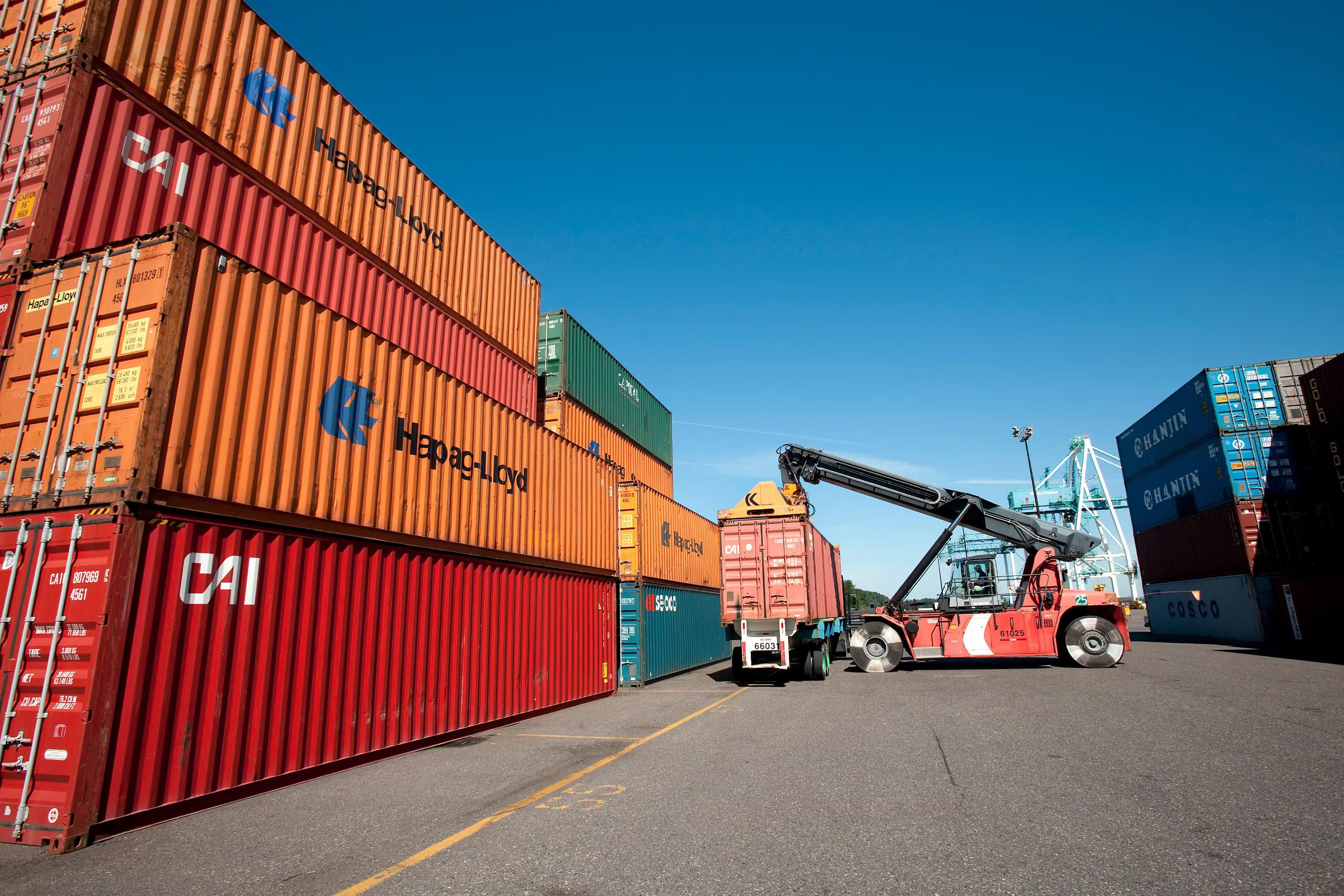
The customer did not see the full tariff shock on the price tag. The cost did not vanish — it never does. It moved backward through the business, into gross margin, supplier terms, sourcing decisions, and the workers and small suppliers expected to absorb every adjustment quietly, without a headline of their own.
THE BILL ENTERED THROUGH LANDED COST
Apparel tariff rates surged before later court action eased stacking. Costs remained elevated, and companies entered 2026 with supply plans built around instability rather than efficiency.
Tapestry estimated a profitability hit near $160 million. Victoria's Secret reported roughly $100 million in net tariff impact. Across the sector, lower margin became the hidden consumer subsidy — paid for, ultimately, by the suppliers and workers with the least power to refuse.
ABSORB FIRST. RAISE PRICES LATER.
Retailers feared that broad price increases would destroy more volume than the tariffs destroyed margin. They turned instead to selective increases, supplier concessions and sourcing shifts.
The strategy protected the visible price while transferring pressure to partners with less leverage — smaller manufacturers, smaller vendors, the people least equipped to say no.
When the shelf price stays still, the pressure does not. It moves quietly to whoever cannot afford to refuse it.
DIVERSIFICATION BECAME SURVIVAL
Supplier diversification was once sold as resilience. Under sustained tariff pressure, it became a requirement for protecting basic profitability, and for the workers at each factory, a question of whether the line would still be running next season.
The companies that delayed the work now face the most expensive version of it: changing factories, countries and lead times while customers remain unwilling to pay for the disruption, and workers on both ends of the shift absorb the uncertainty.