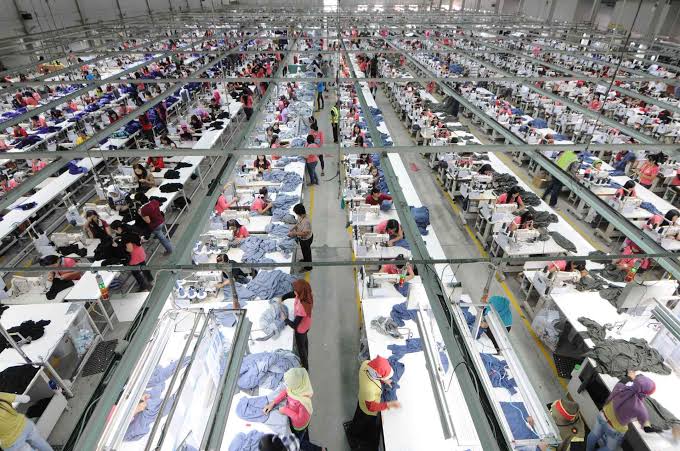
For years, apparel executives promised that disruption would bring production closer to the customer, and closer, in theory, to fairer labor conditions and shorter, more humane supply chains. China lost share. The Americas did not win it. The orders moved deeper into Asia instead, where cost and capacity still defeated the rhetoric of resilience — and where the workers actually making the clothes had no say in any of it.
THE VOLUME MOVED — JUST NOT CLOSER
China's share of sourcing value fell from roughly 30 percent to 22 percent. South Asia rose from approximately 23 percent to 34 percent, concentrated in Vietnam, Bangladesh, India and Cambodia.
Nearshoring in the United States remained close to 17 percent. The supply chain changed countries without changing continents, and without changing much at all for the people standing at the sewing machines.
SPEED WON SPECIAL ORDERS. COST KEPT THE CORE.
Mexico, Colombia and Guatemala attracted programs requiring speed, flexibility and quick replenishment. The planned volume stayed with Asian factories offering scale and lower cost.
Retailers therefore built two systems: nearby production for urgency and distant production for margin, with workers in both systems absorbing the whiplash of demand that changes faster than any factory floor can plan for.
Nearshoring became the emergency lane, not the main highway — a talking point more than a transformation.
THE HEADLINE OUTRAN THE CAPITAL
Corporate presentations described de-risking while purchasing behavior continued to prioritize price. The gap between language and orders shows what retailers valued when the trade-off became real.
Resilience was promised, publicly and often. Cost remained in control — and the workers who were told their region might finally get a share of the work are still waiting.