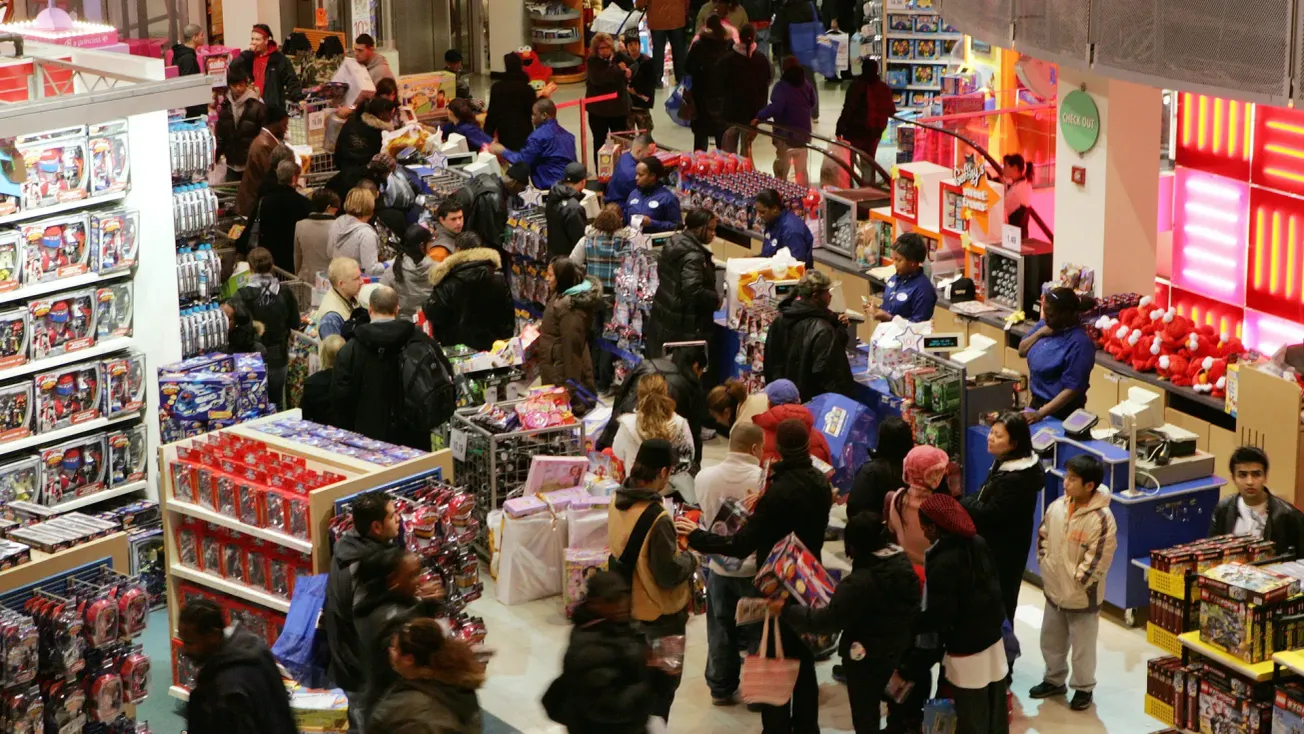
The headline says consumer spending remains resilient. The lived reality is less forgiving: a shorter calendar, weak confidence and households quietly separating into two economies — those still able to spend without thinking twice, and those hunting every discount just to make the holiday feel normal.
THE AVERAGE HIDES TWO DIFFERENT HOLIDAYS
Gift spending may decline only modestly, but the average conceals a growing divide. Higher-income households continue spending while cost-conscious consumers cut budgets and wait for promotions, sometimes quietly choosing which gifts to skip this year.
Millennials are expected to reduce gift and travel spending more sharply, putting pressure on retailers that built plans around broad-based resilience — and putting pressure on families trying to make the season feel the same as it always has.
THE CALENDAR REMOVES THE RECOVERY WINDOW
A compressed season gives merchants less time to read early demand, change promotions and redirect inventory. A mistake visible in mid-December may already be impossible to correct before the customer disappears.
The result is a familiar threat: merchandise ordered for a moment that no longer exists by the time it arrives, and workers scrambling through the final weeks trying to make up for a forecast someone else got wrong.
In a compressed season, a forecast does not get time to be wrong slowly — everyone finds out at once.
THE WINNER WILL READ THE CUSTOMER, NOT THE HEADLINE
Artificial-intelligence personalization and physical store experience are being deployed together, but neither can repair an assortment built for the wrong household.
The season will reward retailers that understand which customers still have discretionary room — and punish those using national averages to order local inventory, leaving real families standing in front of empty shelves or discounted leftovers.