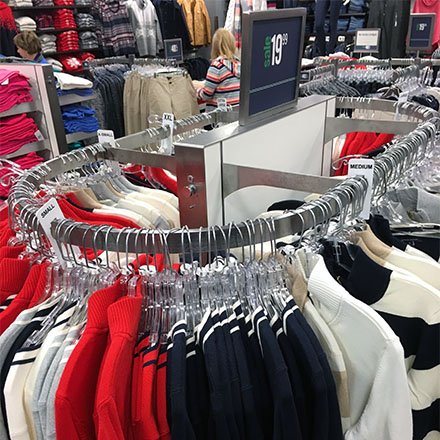
Retailers spent years presenting size inclusion as progress, as something to be proud of, as a promise made directly to customers who had waited a long time to be seen. When inventory and margins tightened, that promise proved easier to shrink than the customer base it was supposed to serve — and easier, still, than admitting the plan itself had failed.
THE ASSORTMENT CONTRACTED QUICKLY
Extended sizes on Target's website reportedly fell about 37 percent between March 2025 and March 2026. Old Navy's options fell about 12 percent. Torrid announced plans to close roughly 180 stores.
The contraction arrives while retailers point to weight-loss drugs, softer demand and changing category economics. Each explanation treats the missing assortment as a market response. Customers experience it as disappearance — as a door quietly closing on a promise they were told would stay open.
INCLUSION WAS BUILT LIKE A CAMPAIGN
Brands that integrated extended sizing into forecasting, fit, sourcing and replenishment have been more resilient. Brands that treated it as a launch story created a promise their operating systems could not sustain — and a disappointment their customers were left to carry alone.
Old Navy's BODEQUALITY rollout became the clearest warning: rapid expansion, misread demand, excess sizes and retreat, in that order.
The customers were not temporary. The commitment was — and that gap between the two is where real people feel abandoned.
THE COST LANDED OUTSIDE THE BOARDROOM
Retailers protected margin by narrowing risk. Shoppers lost physical access, reliable fit and the simple dignity of finding ordinary clothing in ordinary stores, without having to explain or justify their own body to a shrinking rack.
A category does not become unnecessary because a forecast failed. It becomes evidence of whose needs disappear first when the numbers turn against the promise — and evidence of how quickly a company's stated values evaporate under pressure.